



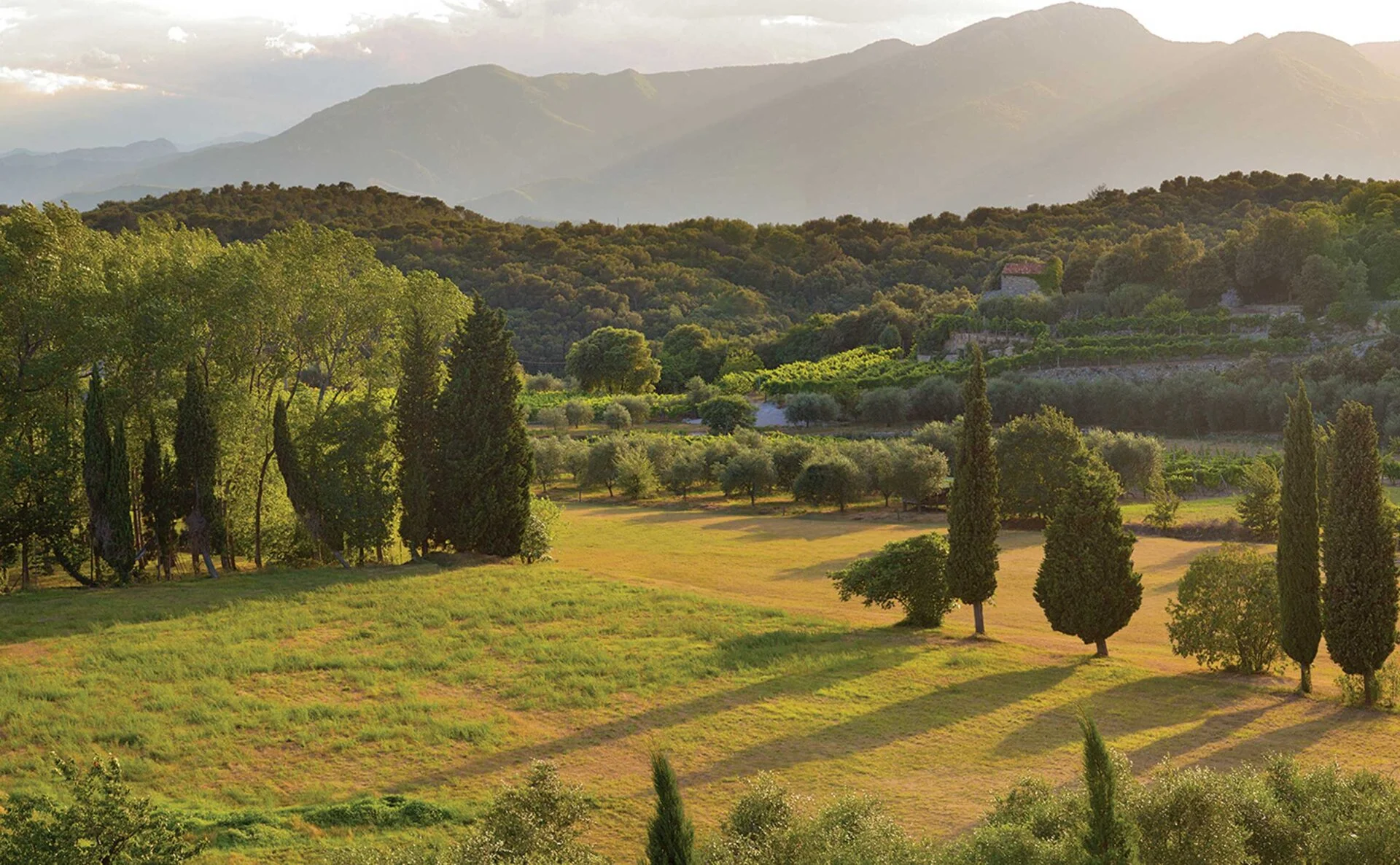
Le Manie plateau
A large karst area combining archaeology, nature and landscape.
The Le Manie plateau occupies one of the most interesting areas of Liguria from a landscape and geological point of view due to the karst phenomena that characterise it.
The numerous trails that criss-cross the plateau have become a paradise for cyclists from all over the world. The edges of the plateau overlooking the bay of Varigotti offer particularly exciting scenery from the top of the steep rocky cliffs, which seem to hang magically over the sea.
The current landscape is characterised by Mediterranean scrub and holm oak woods, while beautiful vineyards produce excellent wines.
But this area is also important for its archaeological remains. The Pleistocene clays in Terre Rosse and La Briga, as well as the Caverna delle Fate overlooking Val Sciusa, have yielded chipped stone artefacts dating back 350,000 years and attributable to Homo heidelbergensis, the oldest human species that populated the Finale area.
Important skeletal remains and numerous artefacts from the Mousterian stone tool industry, attributable to the presence of Neanderthal man, have been found in the same cave and in Palaeolithic deposits discovered in Arma delle Mànie.
THE FAIRY CAVE
In addition to numerous finds, evidence of human presence in the Finale area, referable to Homo Heidelbergensis, the cave is particularly important for Italian prehistory as 16 fragmentary bone finds belonging to Neanderthal Man come from layers dating back to around 70,000 years ago.
L’ARMA DELLE MANIE
It is one of the most evocative prehistoric archaeological sites in the Finale area. The large stone vault, clearly visible from
afar on the Altopiano delle Mànie plateau, contains a sequence of archaeological layers that document human presence
between the Palaeolithic and Neolithic periods. Of particular importance are the layers dating back to the Middle Palaeolithic, when the cave was used by Neanderthal man.
Finally, on the gentle plain of Isasco overlooking the sea above Varigotti, a Roman necropolis has been discovered with burials dating from between the 1st and 7th centuries AD.
Prehistoric finds and grave goods from the Roman necropolis are on display in the Finale Archaeological Museum in Finalborgo.