



Perti
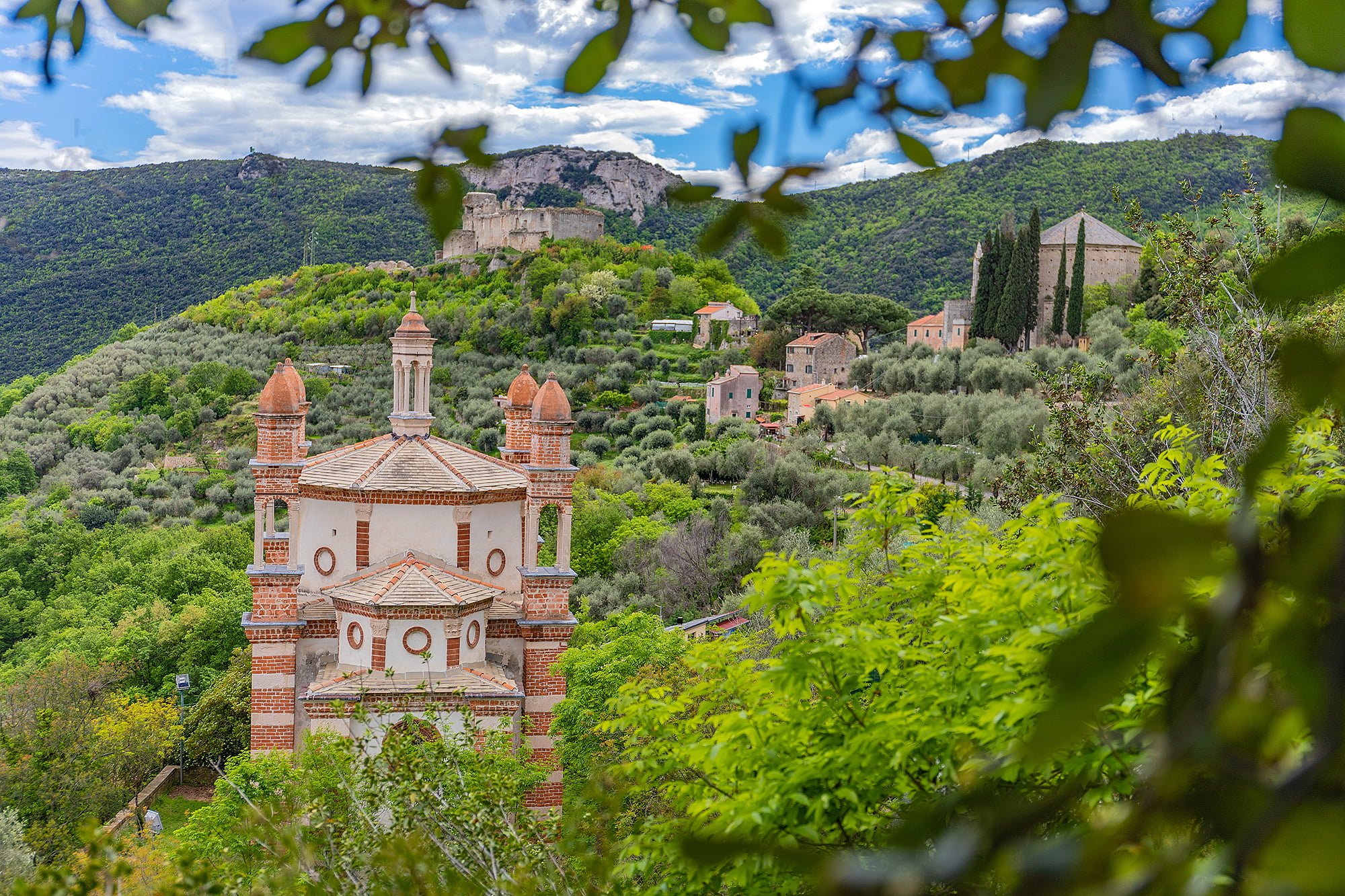
The Perti area, along the mountain ridge that separates the Pora and Aquila valleys, behind Finalborgo, is one of the most evocative landscapes in Finale in terms of scenery and history.
The high walls of Finale stone in the surrounding valleys, a true paradise for free climbers from all over the world, form the backdrop to an enchanting natural landscape.
Traces of centuries-old human presence
Perti has preserved traces of centuries of uninterrupted human presence, dating back to the Palaeolithic era. Neolithic men frequented the Pollera Cave in Montesordo and the numerous caves in the area, but they also lived in open-air villages in the valley floor, while an Iron Age fortified settlement known as ‘the village of Souls’ was discovered on the Rocca di Perti.
Numerous archaeological finds have revealed ancient contacts with the Mediterranean world and the development of the Roman settlement, with a necropolis extending along the western slope of the Castel Gavone hill.
The castle of Sant’Antonino, built between the 6th and 7th centuries AD, was one of the key defensive points of Byzantine Liguria, dominating the valleys that provided access to the coast from above.
The Romanesque churches of Sant’Eusebio and Sant’Antonino date back to the 11th century and feature evocative crypts that are still perfectly preserved.
In the Middle Ages, the area became the centre of power for the Del Carretto marquises, based at Castel Gavone, their magnificent fortified residence.
The presence of this important noble family resulted in magnificent examples of Renaissance architecture commissioned by the Del Carretto family in the second half of the 15th century: the church of Nostra Signora di Loreto (or “dei cinque campanili” – “of the five bell towers”), the tower with its splendid ‘diamond-point’ rustication in Castel Gavone, and the church of San Sebastiano in the Pora valley.