




Perché l’estate a Finale Ligure è diversa da tutte le altre
a cura di Federico Alberto
There is a moment, arriving in Finale Ligure, when you realize that this is not a seaside resort like any other.
It happens when you look up beyond the sea and discover the rock faces that dominate the coast. Or when you walk along a path overlooking the Mediterranean and discover that, beneath your feet, lies an extraordinary geological history.
Here, the presence of the sea does not end at the shoreline, but is found in the stone, the history, the landscapes, and the experiences that accompany every day.
For this reason, in Finale, the sea is only the beginning of the story.
Perché qui il mare incontra la montagna
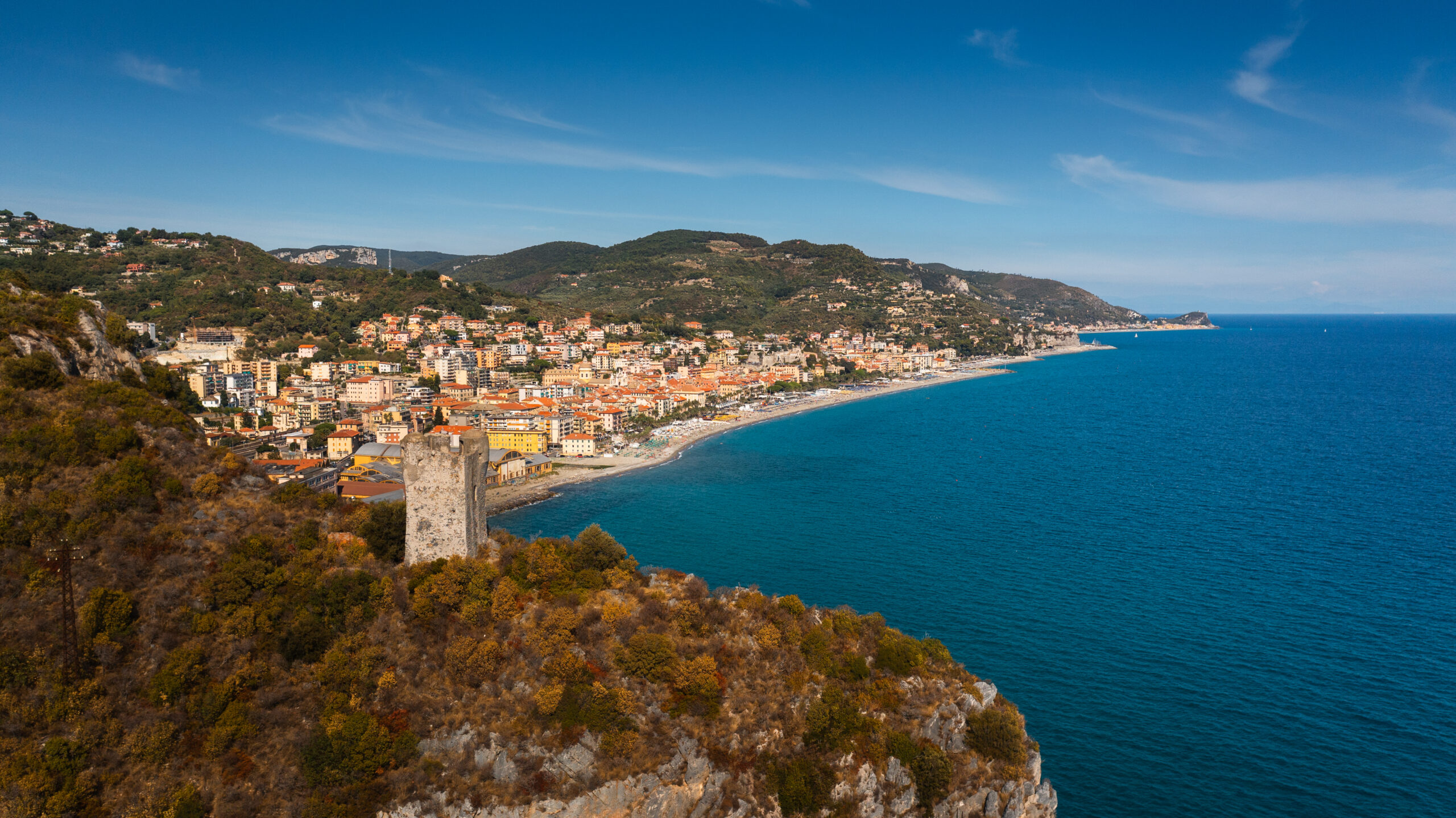
Per comprendere Finale Ligure bisogna partire dalla sua geografia, unica nel Mediterraneo.
Se il mare che oggi si stende davanti alla costa improvvisamente si prosciugasse, il paesaggio rivelerebbe una realtà sorprendente: Finale si troverebbe al centro di un sistema montuoso che dai quasi mille metri del Melogno scende fino ai canyon sottomarini che precipitano a oltre duemila metri di profondità nel Mar Ligure. È il risultato di una storia geologica straordinaria, che ha modellato nei millenni gli altopiani delle Manie, di San Bernardino e della Caprazoppa.
Qui il mare non è soltanto davanti agli occhi: è scritto nella roccia. La celebre Pietra di Finale, che caratterizza grotte, falesie e paesaggi del territorio, racconta di antichi fondali marini emersi nel corso delle ere geologiche.
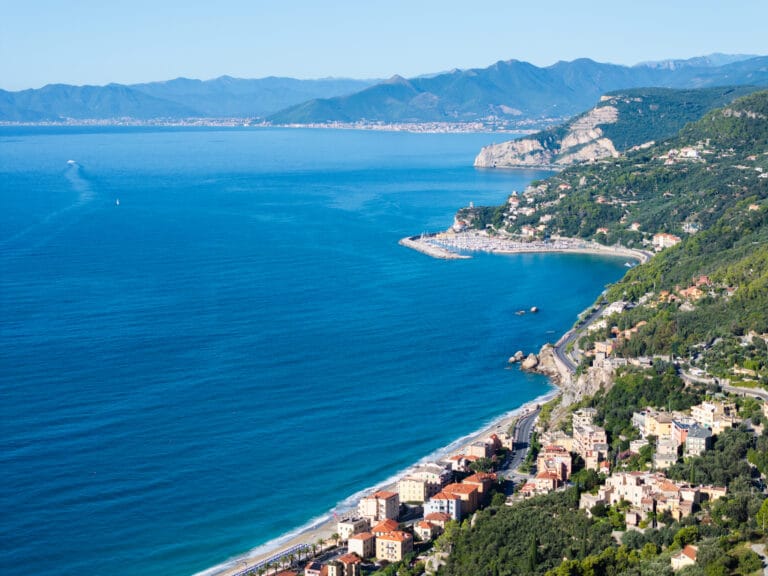
Camminando lungo i sentieri panoramici, tra timo, origano, rosmarino e macchia mediterranea, lo sguardo corre continuamente dall’entroterra al mare. E nelle giornate più fortunate può capitare persino di scorgere il soffio di una balena. Al largo si estende infatti il Santuario Pelagos, una delle aree marine più importanti del Mediterraneo per la tutela dei cetacei.
Perché ogni passeggiata attraversa migliaia di anni di storia
Pochi luoghi in Europa concentrano una tale ricchezza archeologica.
Il Finalese è un territorio carsico, costellato di grotte e cavità che custodiscono alcune delle più importanti testimonianze della presenza umana nel continente. Le Arene Candide rappresentano uno dei siti archeologici più celebri al mondo, tanto da essere considerate da molti studiosi una sorta di “cattedrale” della preistoria europea.
Fu qui che nel 1942 venne scoperta la sepoltura del celebre Giovane Principe, un cacciatore-raccoglitore vissuto oltre 28 mila anni fa. Una scoperta destinata a cambiare per sempre la conoscenza del Paleolitico europeo.
Oggi il Museo Archeologico del Finale racconta questa straordinaria eredità attraverso un percorso completamente rinnovato e accessibile, che permette di intraprendere un viaggio nel tempo dalle prime comunità preistoriche fino alle epoche più recenti.
Perché qui la storia continua fino al Rinascimento
Dalle grotte preistoriche alle architetture rinascimentali il passo, a Finale, è sorprendentemente breve.
Il cuore di questo racconto è Finalborgo, uno dei borghi più belli d’Italia, racchiuso tra mura perfettamente conservate e attraversato da vicoli, piazze e palazzi che testimoniano il ruolo centrale che il Marchesato del Finale ebbe nei commerci e negli equilibri politici del Mediterraneo.
Pochi sanno però che il territorio custodisce anche una delle opere più affascinanti dell’architettura militare rinascimentale italiana. Sopra il borgo si ergono infatti i resti di Castel Gavone e della straordinaria Torre dei Diamanti, progettata da Francesco di Giorgio Martini, geniale architetto senese le cui intuizioni avrebbero influenzato tutta la cultura architettonica del Rinascimento.
Visitare questi luoghi significa scoprire una pagina forse poco conosciuta ma fondamentale della storia italiana.
Because the sea doesn’t end at the beach
The beaches of the Finale coast are just the starting point.
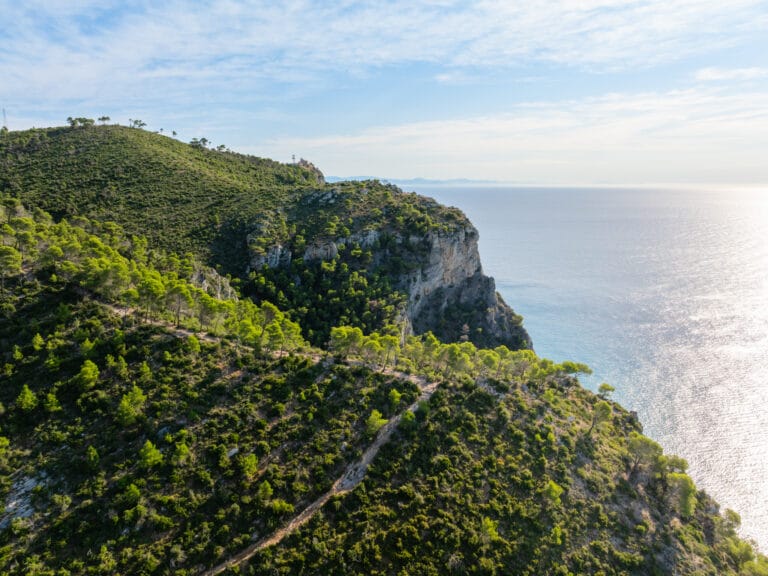
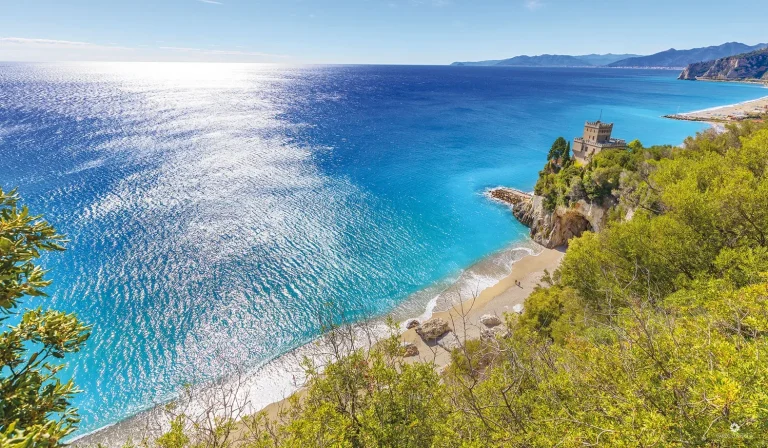
The Baia dei Saraceni, with its transparent waters and cliffs plunging into the blue, is one of the most iconic places in Liguria. Just beyond, the Blue Trail offers views reminiscent of much more distant scenarios, between light-colored rocks and turquoise shades that surprise anyone observing them for the first time.
Snorkeling, diving, kayaking, sailing, and boat trips allow you to discover a coast shaped over millennia by the meeting of water and stone.
Finale is also a destination that has invested for years in accessibility and inclusion. Equipped beaches, dedicated services, and activities promoted by local associations and organizations allow an increasing number of people to experience the sea independently. A commitment that has helped make Finale one of the Ligurian resorts most attentive to welcoming everyone.
Because here outdoor activity is a culture
Long before it became a trend, the outdoors was already part of the identity of the Finale area.
The limestone walls surrounding Finale played a fundamental role in the development of modern sport climbing. Starting from the 1970s, climbers from all over Europe found here an ideal terrain to experiment with new techniques and new ways of experiencing the rock. Now-legendary cliffs such as Rocca di Perti, Monte Cucco, Boragni, and Capo Noli were born, contributing to the birth of what many still define as a true “Finale school.”
A similar story belongs to mountain biking. When enduro was not yet a codified discipline, riders and enthusiasts began to recover ancient mule tracks, military paths, and rural routes that connected the sea to the hinterland. From that intuition was born one of the most internationally famous MTB areas, capable of attracting thousands of enthusiasts from every corner of the planet every year. And it is no coincidence that this year the Finale Outdoor Region will host the 2026 UCI MTB Enduro and E-Enduro World Championships, scheduled from October 16 to 18.
But what makes the Finale area special is not just the numbers or the fame: it is the authentic relationship between outdoor activities and the cultural landscape, a relationship that continues to define the character of the territory.
Because summer is also culture
When the sun sets behind the profiles of the hills, Finale changes face again.
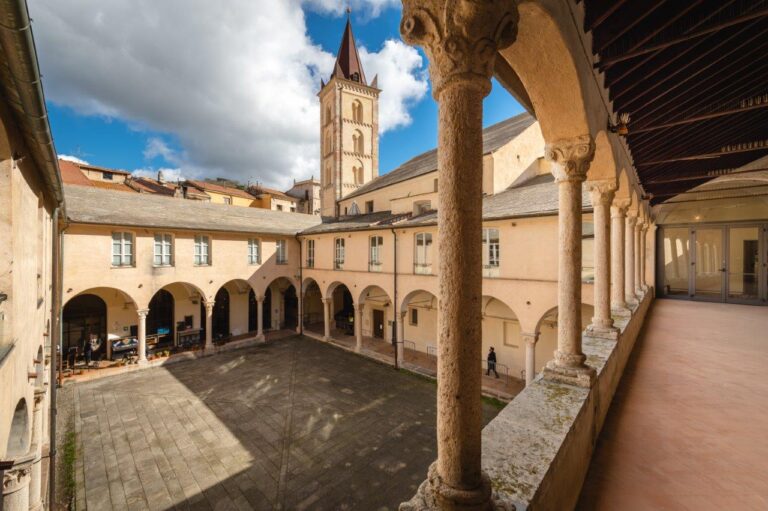
Castles, fortresses, cloisters, and historic squares become natural settings for concerts, theatrical performances, meetings, and cultural events that enliven the entire summer season.
It is a proposal that continuously dialogues with the historical heritage of the territory and allows you to experience extraordinary places in a new dimension, transforming every event into an immersive experience between history, landscape, and performance.
Because every day ends with the flavor of Liguria
Even food and wine tell the character of this territory.
Among the olive groves that cover the hills of the Finale area, high-quality extra virgin olive oils are born, the result of an agricultural tradition that has been able to preserve ancient varieties and knowledge. The vineyards overlooking the sea offer Pigato and Vermentino of great personality, while the local catch, aromatic herbs, and typical dishes of Ligurian cuisine complete a gastronomic heritage deeply linked to the landscape.
These are flavors that speak of the sea and the hinterland, of simplicity and refinement, just like the territory they come from.
A summer to be lived, not just to be told
Perhaps this is precisely the difference.
In Finale Ligure, summer is not measured only in sunny days or hours spent on the beach. It is measured in paths traveled at dawn with the sea on the horizon, in the silence of the caves that hold twenty thousand years of history, in the castles that come to life at sunset, in the cliffs that have made the history of European climbing, in the trails that have made the territory famous among riders from all over the world.
It is precisely this unique combination of nature, culture, sea, outdoors, and quality of life that makes every summer in Finale Ligure different from all others.